Signposting, Signseeking, and Agency Spirals: Hazards for the Ambitious in Tabletop RPGs

There are endless ways to improve one's GMing. But given the fondness many of us hold for our earliest games, as crude and unpolished as they might seem in hindsight... could it be that running fun, engaging games isn't actually that hard? Do veteran GMs, as they acquire opinions, ambitions, and maladaptive habits, get in their own way?
Of course, before committing to a mid-life GMing crisis, it's good to remember that the rose-tinted games of yesteryear were from a simpler time. But if novice GMs are capable of running engaging games, it's probably true that doing so requires less expertise then the volume of GMing discourse™ implies; and also likely that of the GMing practices decried as bad form, many were reinforced and cemented by experience.
Wrestling with one of those habits - reliance on what I call Signposting - started my own journey into the OSR. In their purest form, 'signposts' are instances of design intended to influence player action. They're essentially unavoidable - all design influences player action - but when wielded intentionally, they can be quite powerful. Yet as a GM's reliance on 'signposting' grows, the subtle consequences for player agency can spiral out of control.
While not yet in the TTRPG lexicon, the idea of signposting is adjacent to concepts most GMs are already familiar with. If railroading is a stick, then signposting is a diffuse, socially acceptable carrot. Neither is 'linear prep,' but either can be used to encourage the players to stay in it. Yet unlike railroading, signposts are omnipresent and make no mandates, making signposting the (often unconscious) tool of choice for pro-agency GMs. Its once all parties become accustomed to the arrangement that things go off (or on?) the rails.
Today's topic is all this and more, so strap in readers - this is a long one. The theory-slop train is officially leaving the station. All aboard!
Signposting for Dummies
The literary definition of signposting describes the process by which an author imparts structure or direction within a text for the sake of the reader's comprehension. Transition words like 'however' signpost an upcoming textual shift, keeping the structure natural and clear without clunky, flow-breaking asides.
Translated to level design, trading the 'text' for the 'game world,' the art of signposting is that of subtly influencing, or guiding, player behavior. Designers often signpost by adding extra light or color to features they want to draw the player's attention to. More broadly, while pasting-in 'you should go here' in glossy red text could harm immersion, something like the ever-visible, horizon-framed arches of Skyrim's Bleak Falls Barrow form a natural, dietetic beacon.
Signposting (if we expand the scope) can be achieved through non-visual phenomenon as well. A retrieve-the-stolen-artifact quest in Riverwood, the first post-tutorial settlement, leads the player straight to Bleak Falls Barrow. A few hours later (if following the main quest) the player is sent right back to retrieve a different artifact, assuming the dungeon wasn't already cleared out.
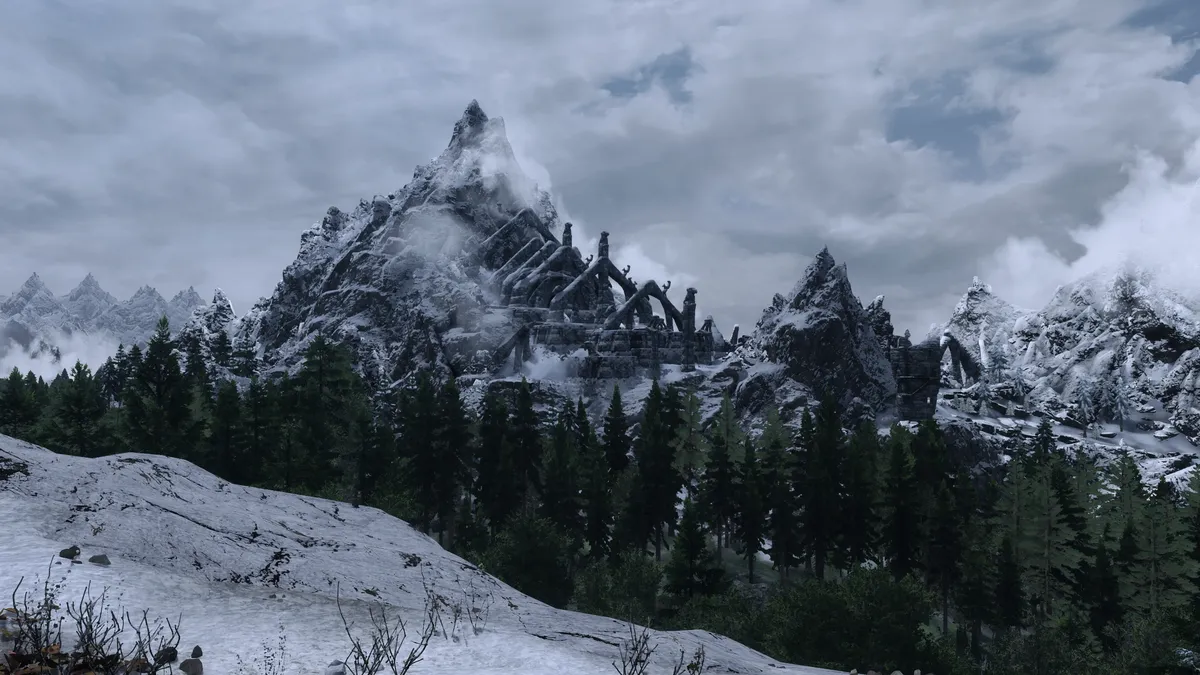
This, of course, could be taken even further. What if you couldn't leave Riverwood before visiting the Barrow? What if the game started in the Barrow? Neither escalation is unreasonable, though once a player's action (or lack thereof) is more 'forced/disallowed' than 'influenced/guided,' you're probably dealing with a bog-standard restriction, which of course has its own valued place in the level designer's toolbox. Cobble together enough 'reasonable' restrictions for the wrong reasons, though, and you get poor-man's signposting. Or as it's better known in TTRPG discourse, railroading.
Despite 'sign' implying the guidance of exploration, the real potential kicks in when signposting is applied to other aspects of gameplay. For a final related example, how one solves Bleak Falls Barrow's pillar-spinning puzzle is excessively hinted at, including not-so-subtle carvings in the puzzle-room itself which literally spell out the answer. All of Skyrim's puzzles are designed for toddlers, but that's the point. The design influences player behavior; that's signposting, baybee!
Of course, the term can become useless if stretched too broadly, but the point here is the designer's agenda. Level design also evokes atmosphere, provides challenge, tell stories, and sets boundaries. Signposting (what will this design push the players to do?) is just another tool in the toolbox.
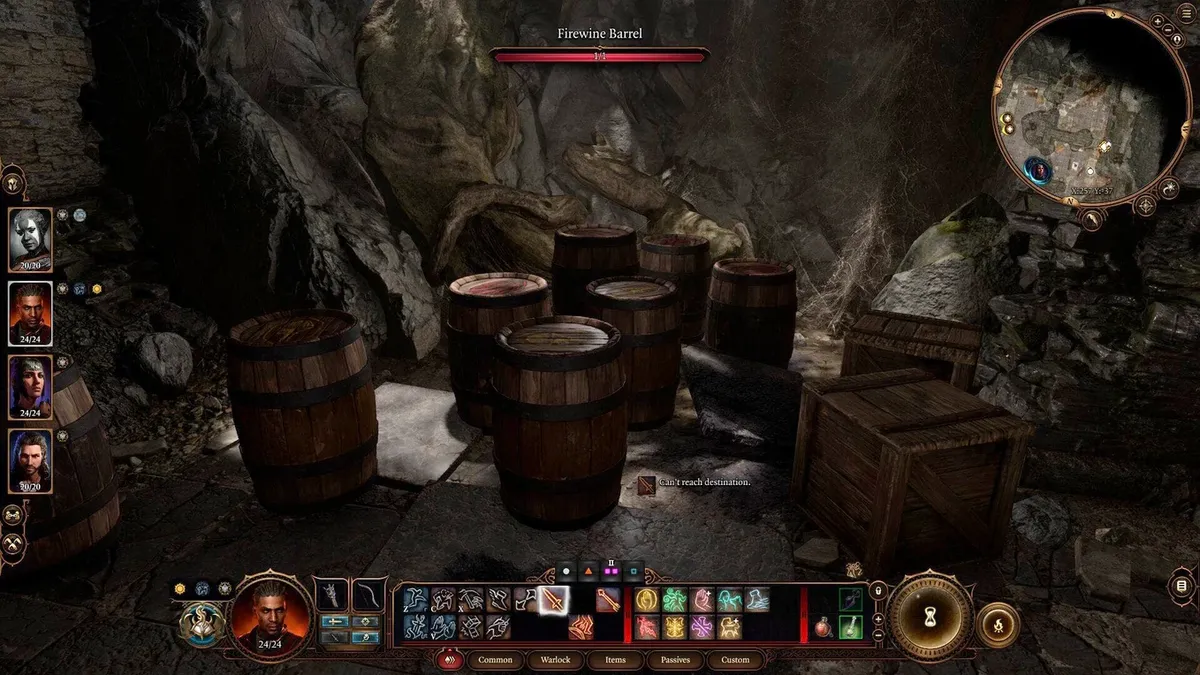
In TTRPGs, where level design is called 'prep,' the most obvious utility of signposting is gently guiding the players towards prepared content and away from everything else. At its simplest, merely choosing to describe a feature is enough to 'suggest' the players interact with it, and the usual tactics of rumors and quests tend to be more than enough to get the party from point A to point B.
Similarly common are combinations of signposts (helpful NPCs, situational information, convenient tools, etc) which turn an open-ended, difficult encounter (how are we gonna take down this dragon) into an easier, closed one (oh finally, the instructions for taking down a dragon). While the players could seek out this aid on their own, many GMs default to 'handing' the player most if not all of what they need through generous interpretation of skill checks, NPCs, and 'well your character would know'-isms, ensuring the heroes feel like they've cleverly saved the day without having to actually rely on their players' cleverness.
Taken a step further, paternalistic NPCs, patrons, or factions might regularly assign, support, or suggest the party's activities, providing consistent influence on a campaign scale. Here it's a little easier to see where excessively signposted gameplay could start to diverge. Is the party's relationship with the faction nuanced and interesting? Or, through the urgency of the 'plot' or the real life expectation of playing along, is the GM prescribing the players' actions for them?
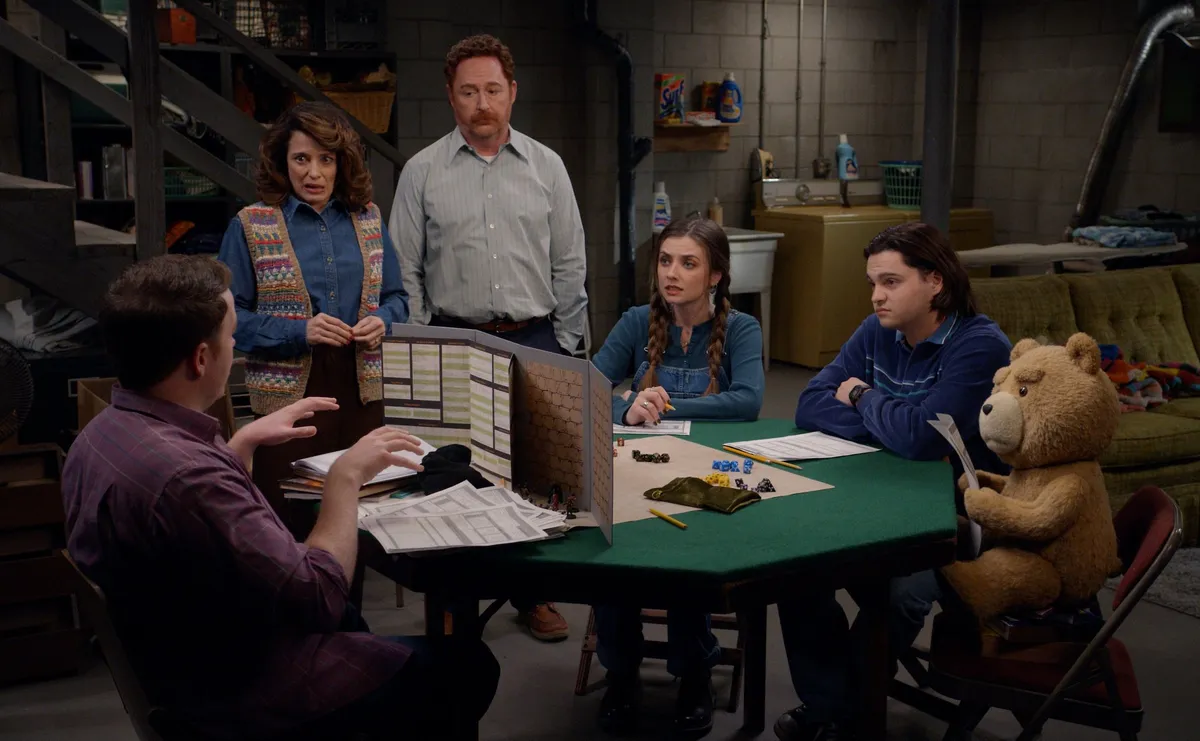
On a even larger scale, a simple prophecy informing the party that they're the 'heroes of destiny' (a mistake I myself made one-too-many times) dramatically influences how players decide which activities are appropriate, for the rest of the campaign! That's not to say that the players won't be into it, or that such a game is doomed to fail. But like with reasonable restrictions eventually turning into a railroad, the compounding of reasonable signposts makes the question of 'what are we going to do this session?' shrink smaller and smaller.
At this point some alarm bells might be ringing. Does signposting harm players' agency? Maybe! It really depends; on the players themselves and on the intent of the GM. Signposting is a continuum; every design decision has the potential to influence player behavior. But there are consequences when that influence, intentionally wielded, seeps into most aspects of play. Even the least arbitrary, blorb-pilled GMs (i.e. those concerned with the consistency of their game worlds; see Elmcat's take) may find themselves hampering their players' agency should baked-in, internally-consistent signposting be used to shepherd them around. As discussed last time,
"Excessive signposting doesn't really restrict player agency, it just ensures it isn't necessary."
"It's not that you can't do things the GM didn't plan for, it's just that those options tend to be unattractive."
Taken to the extreme, when what could be player-led initiatives are routinely suggested, spurred, or made obvious through the circumstances of the game, signposting eventually delivers a game that plays itself. Not because it's quantum and unpredictable, but because if there's anything around worth doing, at any scale, the party can rest easy knowing it'll be designed to get them do it.
Signseeking and Other Semantic Nonsense
If the process is gradual and goodwill is maintained, players can become accustomed to this arrangement.
"This ... precipitates a shift in the player's job from acting on their own desires to figuring out what the GM wants them to do (even if the GM emphatically states otherwise) ..."
Let's call this sort of reactive metagaming, the other side of the signposting coin, 'Signseeking.' It exists on a spectrum within every player's mind, acted-on or not. While these instincts may or may not be verbalized or realized, the more used the players get to the GM 'supporting' one option over others, the more prevalent it becomes.
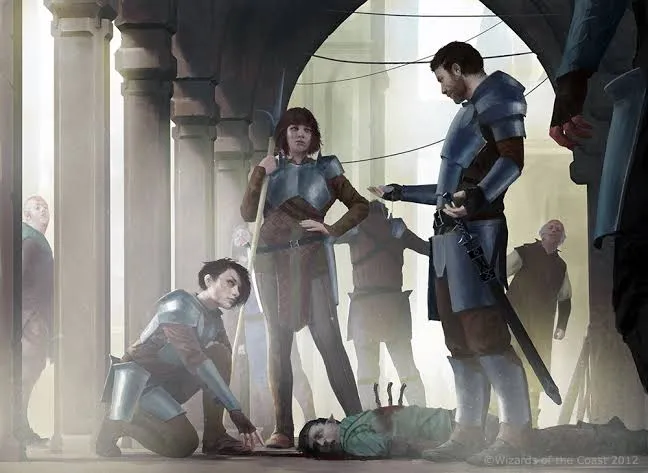
From the players' perspective, metagaming via signseeking can seem like the polite, mature thing to do. In excessively linear or low-information games, blatant signseeking might be the only reliable way to move the game forward. A particularly lazy GM (not that one) might even come to rely on this fact.
Nonetheless, some practical applications of signseeking seem reasonable; it must be good for players to choose to engage with the material the GM actually prepped, after all. But if the players weren't likely to engage without metagaming, the problem, really, is that the GM has prepped an uninteresting or PC-misaligned game. Signseeking isn't doing what sounds the most fun or logical in character (what I'd call 'natural' or 'authentic' play); it's abandoning those drives to optimize towards metagaming when authentic play is no longer as rewarding.
This is (rather crudely) described by the Alexandrian as a symptom of Abused Gamer Syndrome, which he explains as a consequence of formerly railroaded players coming to believe that 'finding the railroad' is the default mode of play. It's not hard to imagine this in players exposed to particularly manipulative GMs, but I don't find it sufficient to explain the origins of most rail/plot/sign-seeking behavior. There are too many novice players who come to the table naturally favoring this style (perhaps because signposts are everywhere in gaming), and too many more who seem to have adapted the habit despite otherwise thriving.
But... isn't excessive signposting just railroading? After all, implying that a certain decision is 'good,' or at least, always providing an obvious one, is implicitly pressuring the players to follow the GM's lead, right?
My goal is drawing attention to a phenomenon which I believe GMs against railroading (whatever that means to them) are particularly susceptible to, but if it's easier to imagine this signposting stuff as having really been railroading all along, be my guest - the point is still worth making! That said, despite the plentiful digital ink spilled over what constitutes a rail, a line, or a quantum ogre, genuine railroading (to me) is underlain by the assumption of conflicting play agendas between the players and the GM.
Breaking this down a bit, I like Rise Up Comus's distinction between GMing which is arbitrary (what he calls quantum, where the reality of play is retroactively edited to suit the GMs needs) or restrictive (what he calls railroading, where play itself is extremely defined and narrow). Taken to their extremes, both harm player agency: the first by making choice pointless, and the second by reducing the number of valid options to choose from. But in order to satisfy what most people mean when they describe being railroaded - given the negative connotation that you aren't just moving in a straight line, but that you cannot get off - that restrictiveness or arbitrariness must extend beyond limiting character options to causing the players themselves, as participants in a collaborative game, to feel their desires for play suppressed.
If the will of the players is to sit back and enjoy the ride, I'd find that style best described as passive, linear play. Signposting guides player choice but risks minimizing it with overuse, while railroading is a pejorative applied to GMs whose abuse their game-given authority to assert their choices over their players.
Why does this distinction matter? Because the majority of GMs, far from fixated on dominating their friends, are just desperate to keep them entertained. Some might prefer open-ended situations, others might favor a clear narrative, but I suspect most would be delighted if their players actually took the initiative for once (despite overlooking the cause of that behavior's rarity). I'm serious! Despite what r/rpghorrorstories might make you think, most GMs aren't sitting around, grumbling about their stupid players and their pathetic little ideas getting in the way. Well, fine, certainly some are.
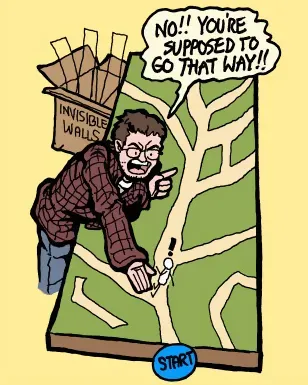
But most of them, especially the new ones, just want to run a good game for their friends. The idea of needing to carefully encourage their players to act of their own accord doesn't even cross their minds. And to be honest, it shouldn't have to. TTRPGs usually just work! If they didn't, no amount of blogosphere advice could've ever gotten the hobby off the ground.
So what changes? Why might those very same, starry-eyed GMs wake up one day to realize that authentic play is slipping away in a game that suddenly appears to be rail-shaped?
Ambition, Fear, and the Agency Spiral
The real danger, I think, lies in how the seemingly innocuous behaviors of signposting and signseeking are amplified and cross-pollinated. And how well-meaning players and GMs, in trying to capture or recapture some magic they think they're missing, might make everything worse. Let's work through an example.
It starts innocently enough. As GMs become more experienced they have a natural tendency to dial things up, and as the players learn the structure (and tells) of play, their ambitions - expressed in increasingly complex backstories, builds, and goals - grow in parallel. As exciting (and relatively modern!) as this evolution is, it puts the game under increasing strain.
With enough commitment and the right expectations, the results can be frankly fantastic...
...but far too often, the GM, being the participant who feels most responsible for the game's success (and the most likely to be an unrepentant control freak) takes on the majority of the burden themselves. A fear of failure and a lack of trust in their players amplifies that burden even more.
The expectation of interwoven backstories sets up story-beats that the GM must find a way to pay off. The players' investment into build-crafting (you know these guys aren't playing Shadowdark) necessitates regular, balanced combat encounters, made exponentially more challenging by complex system rules. And that's not even to mention any of the overarching story goals the GM has promised themselves they must bring to pass.
The GM has, to put it mildly, a lot on their plate. Never, at any point, have they wanted to railroad. But what else are they to do? In the hopes of creating an amazing game, the GM has instead imagined one. What's left isn't to see what the players make of it, but to find a way to, well, squeeze them in. How does one pull this off?
Signposting, of course.
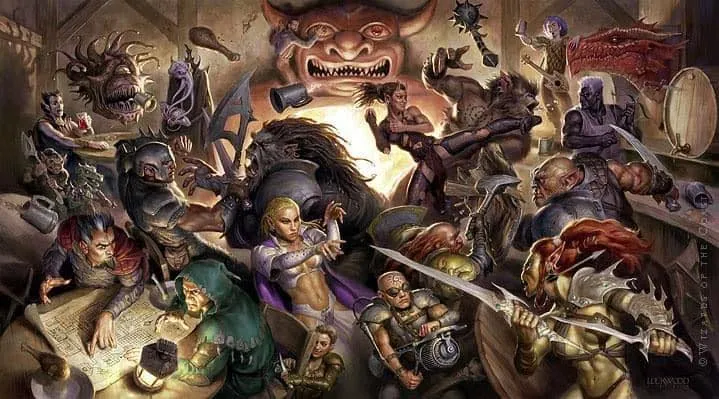
The players won't be 'forced' into a single one of these encounters. But this is exactly what they wanted! Why would they do anything else?
Maybe it works, at least at first. Cool moments are still indeed cool! And even if one dimension for expressing agency is shut down, creative, headstrong players often find another one (for better or for worse). But for most players, it's becoming more and more obvious where the fun 'is' and 'isn't.' Sessions have an agenda now, and the players have accepted that it's their job to get through it. They wanted these high highs too, after all; signseeking to more efficiently find them makes even more sense than before.
Yet, despite the GM's Atlas-like efforts, this style of play is less engaging for most in the long run. Players are so out of practice that when confronted with a real choice, they find authentic play frustrating! Apathy is right around the corner.
This is bad enough as is, but consider: might the GM interpret this as their own failure to deliver a sufficiently engaging narrative? A failure to give the players, who now constantly ask for it, enough direction?
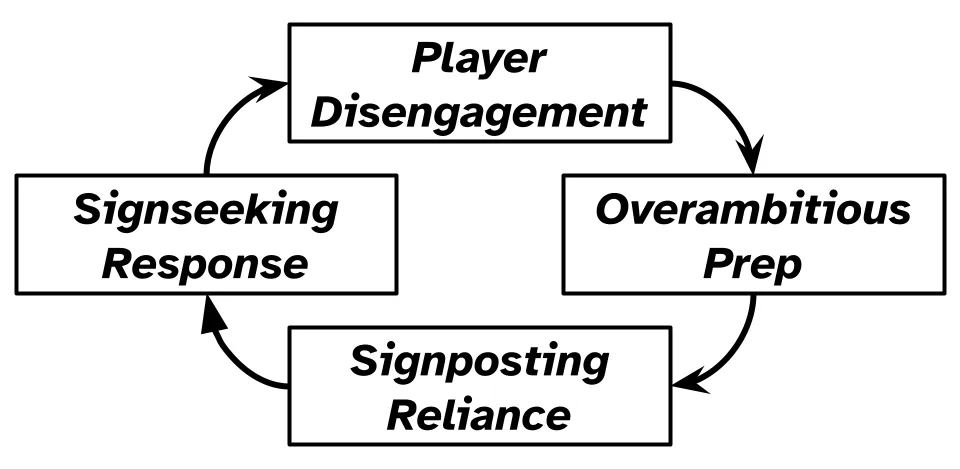
As the GM crams in more content the players have even less say in, actual participation becomes more and more lopsided. And what might have started as an open-ended situation is beginning to decidedly resemble a rail.
Breaking the Wheel
There's actually a pretty cool analogy to systems theory here. GM-player interactions can be seen as forming a complex, adaptive system, which are notoriously hard to predict and full of behavioral feedback loops. Like the stock market. And Dwarf Fortress.
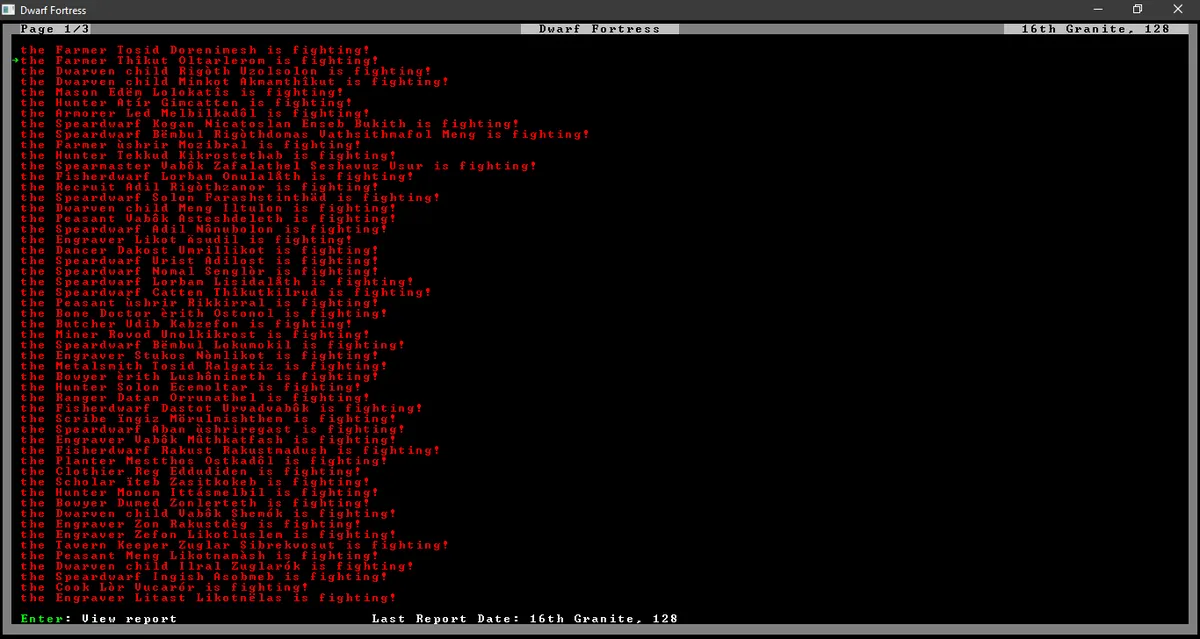
Given the difficulty of 'guiding' one of these systems, it might be better to focus on making the underlying experience deeper and richer than risking Goodhart's wrath by constantly pushing the players and yourself to be more productive and engaged. Continuing our systems theory theme, Agency Spirals might simply be an attractor state these tables run the risk of drifting towards.
Thankfully, there are plenty of prophylactics. The ancient OSR maxim, 'prep situations, not plots' handily prevents the spiral from getting off the ground. Even if you prefer straightforward, event-based play, prepping in terms of the properties of and interactions between relevant fictional elements (instead of timelines) might be the single best way to encourage players to interact with the world. But sadly, in an age of actual play and epic storylines, it might be obvious why so many GMs simply don't see things this way.
But hey, I get it! I don't want to give up my precious storylines either. I'm getting used to letting them emerge during play, but there's something to be said for a good old fashioned ready-made twist. My advice is to just loosen your grip a little. You don't have to run a sandbox, but you should trust your players to be satisfied with their own decisions. Give them the power to derail sessions and fail quests, and you might find they use it more responsibly. You might even get a little more comfortable with uncertainty yourself.
In fact, here's a handy-dandy flowchart to help keep you on track (and for me to point to when the semantics police come to arrest me for making up new words).
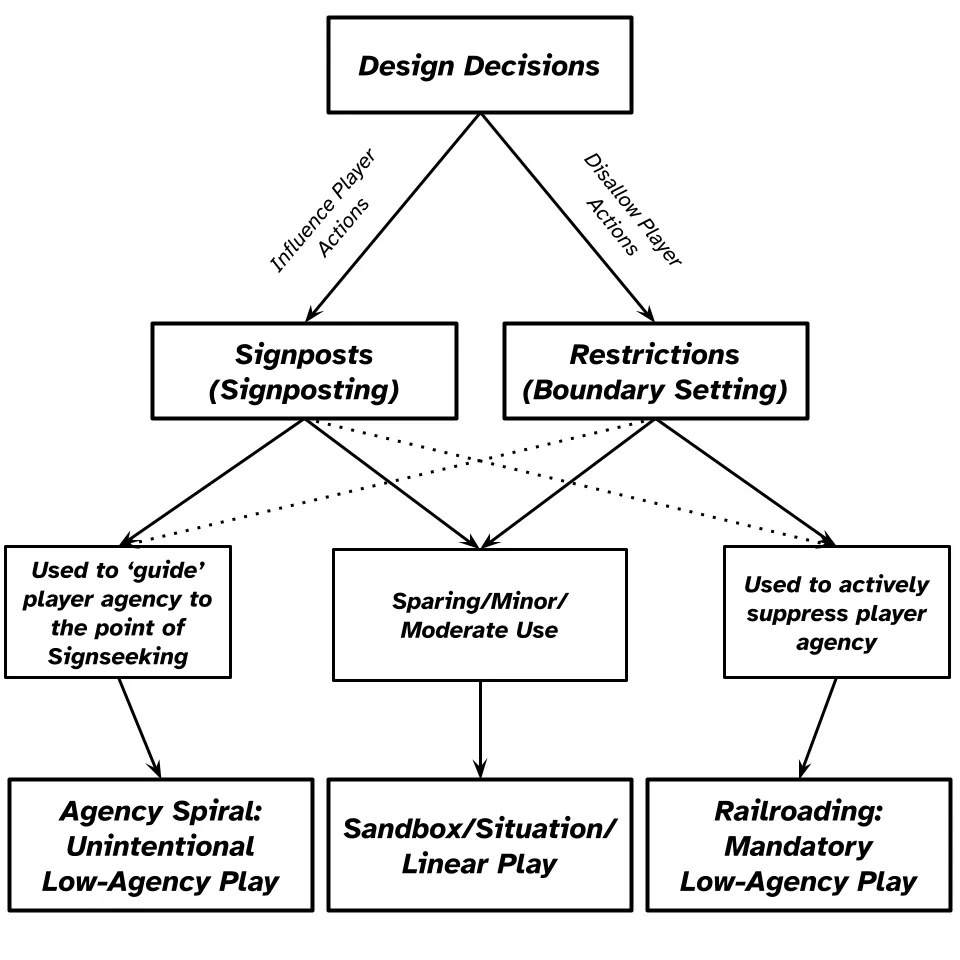
If you do want to run a sandbox, or perhaps more wisely, a local, interesting situation, you're in good hands here at the local blogosphere. Take a look around; find something that looks cool! It's always a good idea to run and learn from prewritten adventures, especially as I imagine the GMs most susceptible to agency spirals are the ones who tend to homebrew all their games from scratch. If you must write something yourself, instead of a plotted-outline, you can't go wrong with a few factions vying for power in a local region filled with interesting characters and magic-filled locales. Cool, unscripted stuff is guaranteed to happen. That's most of what Act 1 in Baulder's Gate 3 is! You could do worse.
Anyway, I also hope it's clear that while some of this terminology is new, the problems and solutions pertaining to them are not. The Agency Spiral is also the folly of excessive people pleasing. GMs will be especially tempted to rely on signposting with players who aren't invested in play in the first place. Online play (and tight schedules in general) makes pretty much all of this worse!
And the end of the day, every game must strike a compromise between the benefits and consequences of arbitrary or consistent restrictions, signposts, and, to put it another way, player handholding. In fact, if you found this entire post baffling, it might be because you're used to headstrong players who couldn’t care less about the subliminal guidance you may or may not have attempted to impart. Good for you! When they annoy you, remember, their dense foreheads are worth their weight in gold.
But if you did find this all to be eerily relatable, know that you aren't alone! This (obviously) happened to me, it's happened to very talented GMs I know, and I suspect it happens all over the hobby. The good news is that this hobby is naturally enjoyable, even when things don't work out how we'd imagined. Those games were probably still worth every moment, and your future games will be as well.
So go forth! Slay some dragons! And think about leaving the instruction manual at home.