Into the OSR, or, How I Learned to Stop Signposting and Love Cthulhu
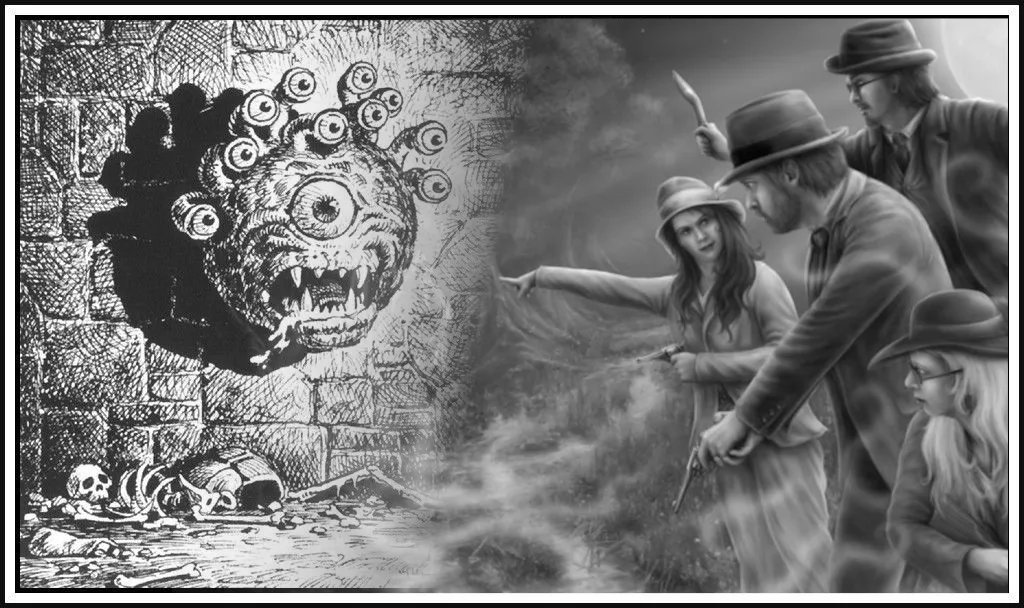
This is Part 1 of a series on bringing an OSR perspective to Call of Cthulhu. Check out Part 2 here!
So I'm really getting into this thing called the OSR. Some say it's already over, which is unfortunate. And news to me having only just arrived. Thankfully everyone keeps talking about it anyway.
What is this Old School Revival/Renaissance? I'm not sure I really know. But I can tell you what I think it is. Literally, it appears to be a desire to return to the rpg practices of yore - not '2006' yore (by then a form of the OSR was already around), but, well, 1974 yore. Three loosely connected brown books written by wargamers, yore.
What's piqued my interest is the scene's near-sacred emphasis on emergent story and open-ended play. Rather than stating a vague intent and 'rolling at it,' you're encouraged to describe plausible approaches to in-fiction problems. You might get involved with the local thieves guild 'because that furthers your goals' or even 'because that sounds the most fun' rather than 'because that's what the last quest giver/backstory NPC (read: GM) pointed you toward.'
In my short time experimenting with it, I've found this shift away from strict mechanics and prewritten 'plot' to be incredibly refreshing. Reviving. A Renaissance, even.

As you read on, reader, you might think to yourself, 'hey, I already do this! But I don't run Mörk Borg or Old School Essentials or any other 'OSR' system, I run 5e D&D! or Pathfinder! Or something.' Which is great. To be clear, I find the OSR better described as a mindset than a categorical TTRPG genre. Though some systems certainly make 'OSR'-ing easier than others.
Look, I know your character gets a massive bonus to hammering. And that this module is effectively a sequence of CR appropriate nails. But come on! Think outside the box!
You might also think, 'hey, I don't see a single reference to dungeon design! Or gold as XP! Or THAC0! This isn't Old School at all!' Which is, uh. Yeah that's fair. Take it up with the naming committee.
Semantics aside, while there are a number of 'OSR' principles, at the core seems to be a fundamental reliance on player decisions. It's tempting to interpret this axiom as just 'not-railroading' ...
Railroading: When a GM abuses their creative 'authority' to contain play within an arbitrary, pre-defined scope. See also: You'd be happier writing a novel.
... but that somewhat misses the mark. So, what is it about 'modern' TTRPGs that the OSR is reacting to?
Confessions of a Signposter
Plenty of GMs allow for players to steer the game in whatever direction they like. In theory. In practice, those occurrences might be... rare. Feel suboptimal. Even seem 'impolite.' It's not that you can't do things the GM didn't plan for, it's just that those options tend to be unattractive. As the trend deepens, players come to understand this effortless flow from hook to hook as the way the game is meant to be played.
I'm not describing a GM who punishes players for deviating from their prepared story, to be clear. Just one who never really intends for it to happen.
This, at least in my experience, precipitates a shift in the player's job from acting on their own desires to figuring out what the GM wants them to do (even if the GM emphatically states otherwise) for no other reason than 'figuring it out' tends to result in the best play experience. Moving towards the prep and finding the intended path becomes a powerful metagame; when you're on it, you're rewarded with story beats and balanced encounters and appropriate loot. When you aren't, the game grinds.
I suspect most GMs don't start this way - I certainly didn't. I suspect, like me, novice GMs don't think in terms of plots and structure so much as they throw things at the wall to see what sticks. In hindsight, I think that's actually a great way to run an rpg. In my earliest games from the golden years that hooked me on the hobby, my equally naive players enthusiastically responded to that which slid down the metaphorical wall with new, exciting plans each session, joyously reveling in the freedom the video games they grew up with couldn't offer.
It was only more recently, when we became more 'ambitious' (having by then seen more than a few episodes of high budget live action productions) that I started planning for the long-term, with twists, and deep backstory integration, and ambitious combat scenes. As a result, my prep became more fragile. More... streamlined. I don't know if I or my players ever saw this as railroading, and I don't think that I do now. I merely ensured that they usually had an obvious goal with an obvious way of working towards it, and wouldn't you know it, most sessions played out the way I'd paced them in my prep outline. That made the party predictable, which meant I could afford to spend more time on the exact 'thing' they would do next... and the cycle continued.
At first, my players' occasionally stated goals (I sure do hate that one guy) at least informed what the next session's prep would look like, (oh look, an opportunity to kill that one guy! And he's tied into one of our backstories! nice!) which I told myself was proof that this was still a player-driven game. It was only near the end of a three year campaign I had fully outlined a year in advance that I finally realized that I'd lost something along the way.
But if this style - one my and many other groups have enjoyed - isn't railroading, then what is it? For the moment, I'm going to call it Signposting. Perhaps there are better, more enlightened terms I'm not aware of, (feel free to let me know!) but I think this does the trick. Excessive signposting doesn't really restrict player agency, it just ensures it isn't necessary. In some circumstances, that might be good! But I think it comes at a cost. As for us, my players didn't dream as much. The excitement of a world waiting for them to act upon it was slowly replaced with anticipating what I would invent for them to do. But at least my stories were good! And the players' roleplay, immaculate! At least, the descriptive roleplay. Acting roleplay. Roleplay that is less about thinking for your character, but rather sounding like them.
Surely there is a better way. Perhaps an OSR way. An OSR way within Chaosium's hit role-playing game Call of Cthulhu. Did you know that this blog post was about Call of Cthulhu? It is now!
Running Old School R'lyeh
Some time ago, after running the classic Haunting scenario, I decided to write a ~10 session campaign of Call of Cthulhu from scratch, which I found to my shock and horror to be exceptionally difficult. I found the rhythm of tension and action to be fairly natural, but investigation-based-gameplay, the oft overlooked, less exciting sibling most CoC games at least claim to rely on did not prove straightforward, especially for someone used to prepping one self-contained hook at a time.
I then finished the aforementioned three year campaign, somewhat unsatisfied, which led me to the OSR and the surrounding blogosphere on this beautiful little corner of the internet. I dipped my toes into Shadowdark and Mothership. And after a time, I was finally ready to try my hand at a campaign once again. I would take the theoretical lessons of the OSR into the practical trenches of my Thursday night game. And I really, really wanted to do it in Call of Cthulhu.
First, you might ask if (7th edition) Call of Cthulhu even can be played as an OSR game. I haven't seen it called such before, but from a nuts and bolts perspective, I submit that it's not a bad candidate. The game is highly lethal, simple(er) than modern D&D with its average joe PCs, and combat, pitting said Joes against supernatural entities, or worse, people with guns, is far from balanced. While character skill does matter, decisions easily matter more - choosing if and when to go into the haunted coal mine is generally more important than your ability to dodge attacks from the 7th dimensional ghost living there.
The counter argument, of course, is that CoC can't capture the OSR style because CoC isn't 'about' decisions at all. Given the whole gist of cosmic horror being humans' powerlessness to influence the unimaginable nightmares running things behind the scenes, your players aren't here to 'solve problems' so much as come along for a very scary hayride. Which, to me, is all well and good for a short story or one-shot, but totally bunk for a campaign. Even if the level of success you're shooting for is 'making it out alive,' that beats the absolute pants off of wandering from haunted house to haunted house over the course of 10 sessions with no real goal in mind.
Semantics aside - again - it took a lot of prep up front to make the ideas in my head fit an open-ended adventure on paper. But the investment would come to pay dividends. I started with a list of desired features - a voice stealing cryptid, an abandoned research lab, missing students (the party consisted of high school seniors in the 80's) - and fleshed out a situation. Not a plot! Not an outline of rough scenes that the players would 'hopefully' follow. Just an Appalachian coal town, the cryptid living in the woods, and their shared history. Extremely helpful for this were the Alexandrian's lessons on node-based adventures and the three clue rule, both great ways to give the campaign player-dependent structure without too much concern that they might end up stuck.
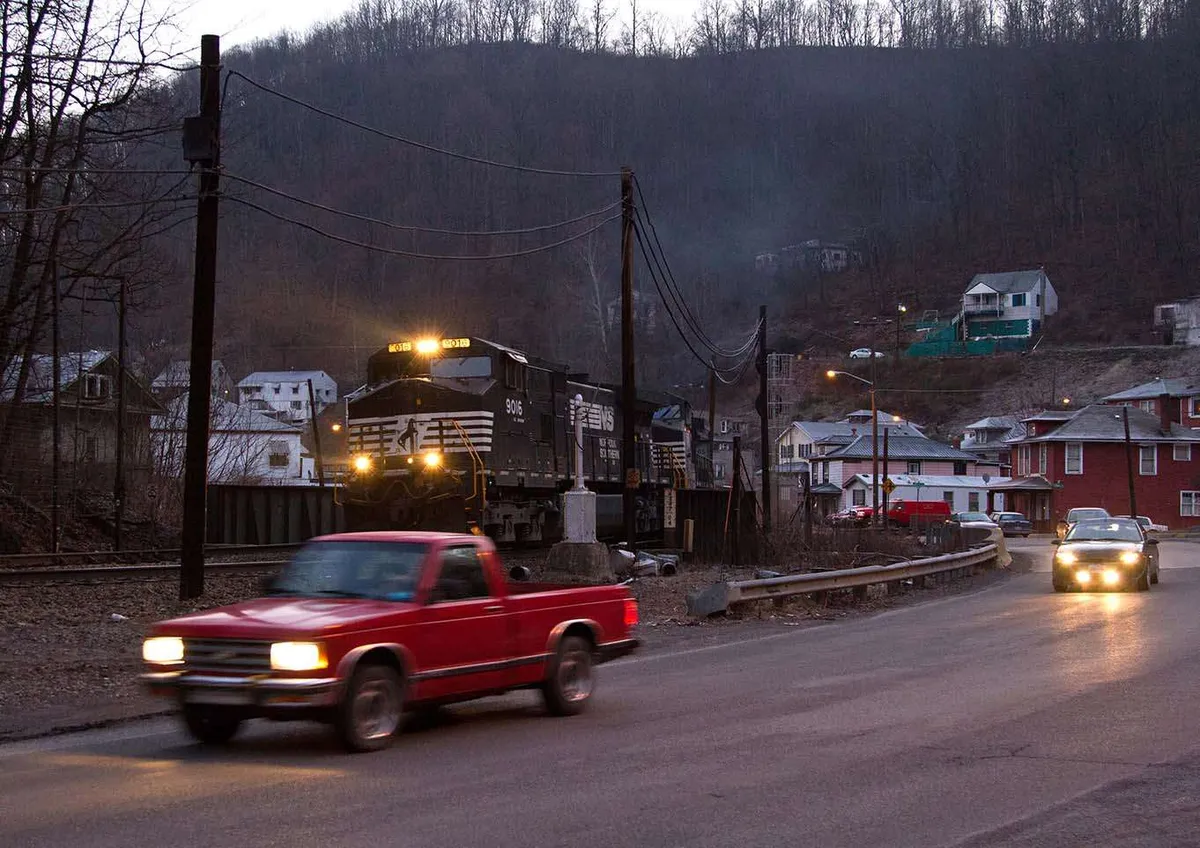
The game kicked off with a party crashed by the cryptid, leaving a series of clues pointing to new sets of nodes: locations, people, ideas, etc... All I had to do was play the world, sometimes reacting to the players, sometimes coming to them directly. After 15 sessions, the players had evaded corrupt police, navigated their family lives, thrown a game winning Hail Mary to defeat their cross-county rivals, and learned enough occult magic to bind the cryptid under a thousand tons of stone. It was glorious. And it was theirs.
Lessons from the Field
So, did it work? Uh, yeah, I guess! It certainly worked for me. It had the desired effect of putting the players back in the driver's seat. And everyone seemed to have fun.
The issue with these sorts of post-mortems (besides making this already-too-long post even longer) is the temptation to tell you that my theory crafting paid off in practice exactly as I'd predicted. I can say I think the players were more engaged! I think the horror was amplified by knowing the plan that got them to death's door was their own. I sincerely hope that thinking for their characters made my players feel like their characters. And by the end, I felt much better about this game than I had many previous.
There were also some hiccups. As the game progressed, I found myself again and again relinquishing narrative control and chucking it to the players with yet another 'ok cool, now what are you doing?' Exacerbated by the usual problems of online play, general uncertainty, and the setting's high danger, the awkward debates that followed didn't exactly come naturally. And the plans they generated tended towards the conservative.
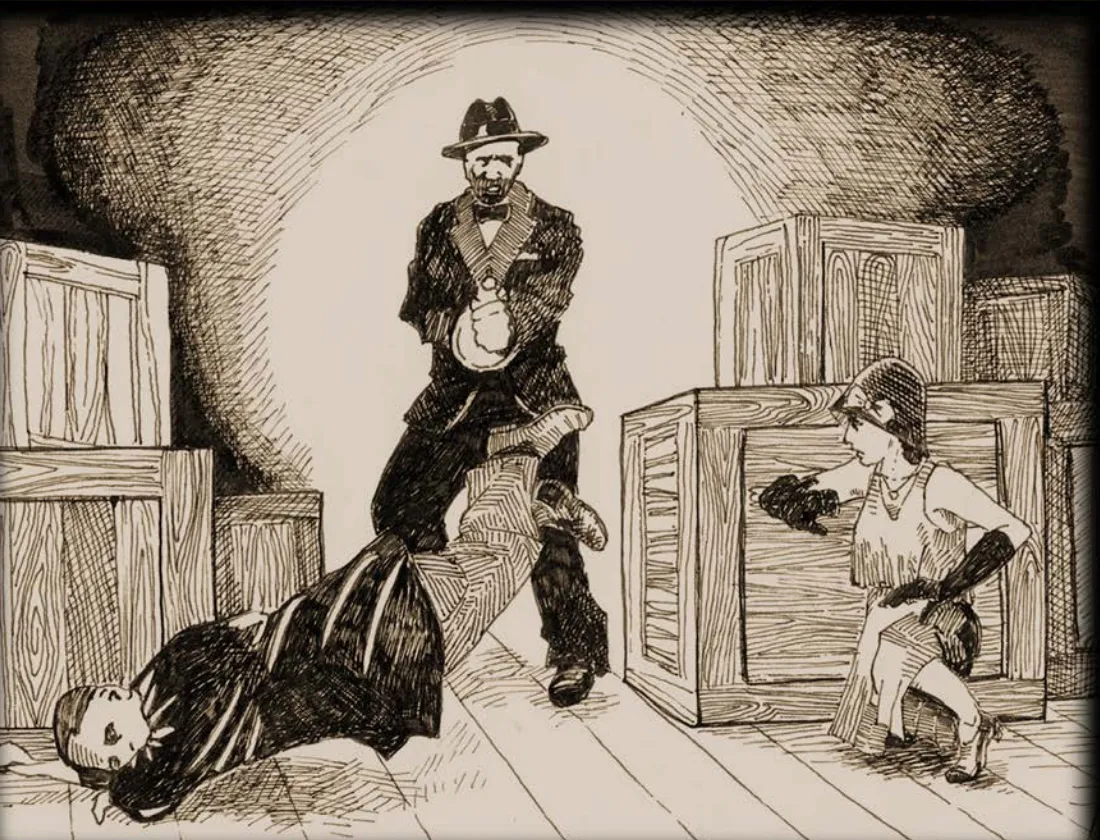
It was here, about halfway through the game, that I learned some pretty important lessons.
First, some players simply don't thrive in what I call proactive play. Having to sit down, consider evidence, deliberate with your teammates, and eventually agree on a strategy just isn't something everyone finds natural, or even enjoys at all. And even for those who do, it can still drag under the wrong circumstances.
Second, when relying on the players to take initiative, giving adequate information is king. For anyone else following me into Old School R'lyeh, know that fear of the unknown will spark frustration or apathy if its welcome is overstayed.
But the third and perhaps most important lesson is that the beauty of proactive gameplay doesn't mean that the game can't occasionally come directly to the players. Some of the best scenes occurred when the party was caught on the back foot, even if it being caught on the defensive was due to something they'd caused or an evolving risk they hadn't addressed. There are plenty of meaningful decisions to be made outside of the plan-execute-review framework, and the experience of play, which I contend still relies on agency, doesn't exclusively exist in its execution.
Sometimes it’s nice to sit back and eat the metaphorical popcorn while the Outlast OST blares in the background.
So here is the take home message, dear reader. If you feel like your games are playing themselves, give the OSR a try. I found it to be incredibly rewarding. But like any tool, success comes in the art of its application. Here's hoping your next horror game puts the players in the driver's seat. Some of the time.