Investigation as Exploration - Designing an OSR Style Scenario for Call of Cthulhu
Before we start, I have to give my dearest thanks to the Prismatic Waystation community and especially Evlyn Moreau for amplifying my very first post! I'm so grateful for the warm reception, and I can't wait to write more.
When we last met, my first foray into the blogosphere told two stories; of what I lost by running mostly Signposted plots, and how I got it back by applying OSR principles - in Call of Cthulhu of all places.
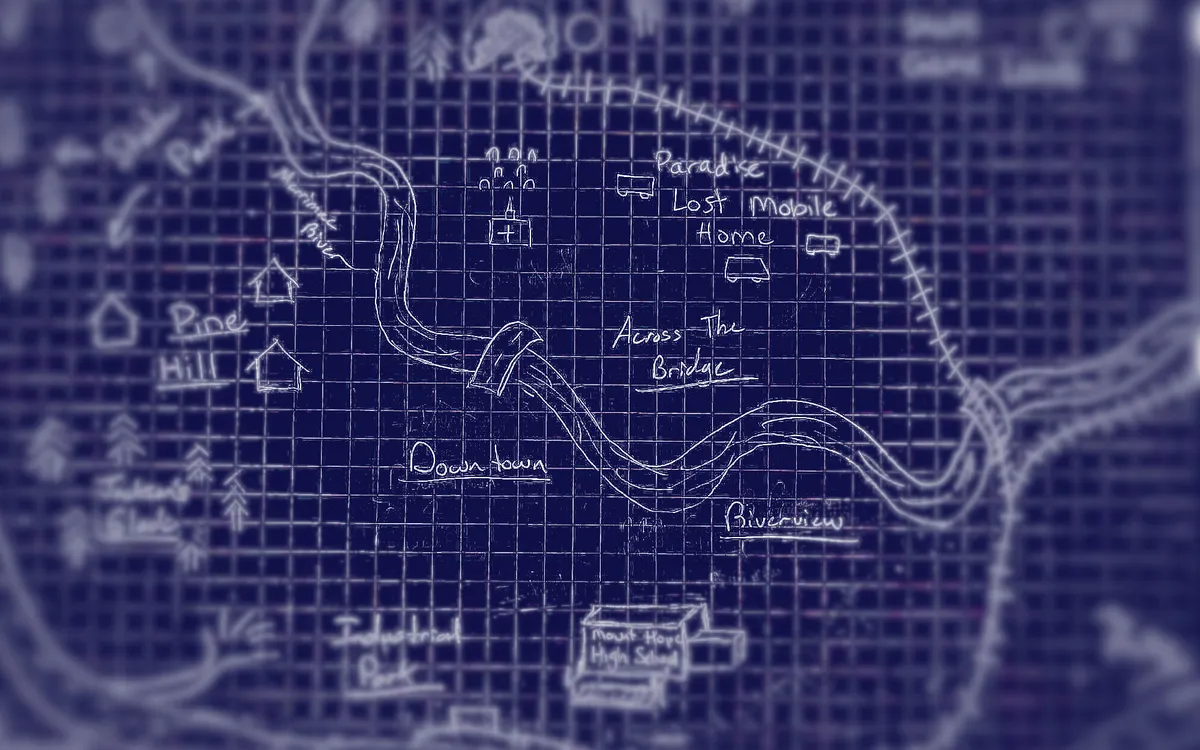
Today, I'm talking through the OSR-inspired design of that Call of Cthulhu game, particularly my take on delivering a sprawling and exploration-based mystery. But before we start, let's revisit my takeaways from last week.
- Not every player/party is good at/enjoys proactive play.
- The desired to hold back information for the sake of investigation/tension must be balanced with the players' need to make informed decisions.
- Some of the best moments were reactive (the police chief is banging on your door, what do you do?) rather than proactive (you have leads pointing to the abandoned research lab and the state park. What's the plan?).
An Aside on Agency
Despite the OSR influence, a pure sandbox this is not. My players (in my game, Steve Harrington-coded high school seniors in 1985) could, of course, abandon the mystery and instead focus their efforts on some goal they'd invented themselves, like, say, 'having a chat' with Ronald Reagan. My players joked about doing this many times. That could, genuinely, be fun to see played out.
And a horrible idea, of course, as we all know Ronald Reagan was an extremely powerful warlock.
But that isn't the kind of game we came to play, and that's ok. This scenario broadly assumes what the players will get up to - solving a local mystery, and then later, dealing with a supernatural threat.
Is that assumption Signposting? Or Railroading? Or in violation of the laws of Holy Blorb?
Well, sorta. We do want to consider how much we're assuming of the players when we design scenarios - if we assume too much, there won't be much room for agency before play escapes what the scenario was designed to support, and then we're back to Railroading (going outside of narrow prep is illegal) or Signposting (going outside of narrow prep is boring). Which, as Magnolia Keep points out, also has its upsides!

But if instead of a plot to follow, we prepare an OSR-y situation to explore, those assumptions don't compromise agency. If anything, having a clear goal means those 'meaningful decisions' we're so worked up about will actually have direction, which makes them all the more meaningful!
We want the players to buy in. Their beloved English teacher (you know the one) and some classmates are missing! The game starts with witnessing another victim lured into the woods at a party-gone-wrong! What's not to love?
Investigation as Exploration
Once the players have bought in, the meat of the gameplay we're designing for is investigation. Warren D. at I Cast Light! writes about how one might use Sean McCoy's Investigation Sheets in Call of Cthulhu to support what I would call investigation-as-puzzle, where the primary goal is fitting clues together by tracking alibis, motives, and the like to explain a focal event, archetypically an unsolved crime. This can absolutely work in CoC, but centers on more cerebral, sherlock-esque deliberations than the atmospheric, frantic, and tense moments I find CoC best suited for. What works best for me is what I would call investigation-as-exploration.
Within investigation-as-exploration, a clue is less a puzzle piece and more a vector, pointing weakly or strongly towards where one might look for more clues (or other things-of-interest) next.
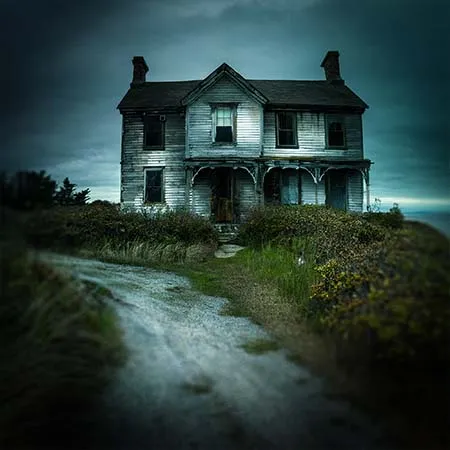
That isn't to say there's no room for deliberation, but rather than zeroing in on Professor Plum with the Candlestick in the Library, the investigation-as-exploration scenario is filled with numerous, smaller, vaguer conclusions...
- What was that thing in the woods?
- Where does it take its victims?
- What are its weaknesses?
- Why are the authorities trying to cover it up?
...which paint a bigger, never-quite-complete picture. When the question isn't whodunit, but 'what and how'-dunit, you also avoid a 'scenario failure' by not relying on a singular big reveal; unresolved threads are just missed opportunities - information is basically just loot. Embrace that not every stone will be unturned or secret horde plundered - that's up to the players, not you.
This hits upon another common conundrum in investigation design. Should all clues be locked behind skill checks? Should all clues be explicitly found? I find Anne from DIY & dragon's Landmark, Hidden, Secret advice for thinking about information especially useful here. In practice...
- Some clues can be obvious, standout Landmarks (The smell of ozone clearly indicates the cryptid has been here.)
- Some can be Hidden but obvious if explicitly uncovered (A dirty receipt proves the police chief's corruption, if you break into his house to find it.)
- And some can be Secret, tricky to find at all (In the locked and abandoned research lab, a science experiment hints at the cryptid's function, if the characters are brave enough to find it and smart enough to interpret the results.)
This also easily fits with running the game 'fiction first' - most clues are just what you would expect to find if what actually happened did! The other trick is to be about 50% more generous with information than your instinct tells you to be. Communication within TTRPGs is hard; players miss things all the time. The more something needs to be found, the more clues must point to it!
Tying it All Together
We've now arrived at node based design. Our list of the situation's features - locations, people, even ideas - must be connected with redundant, looping, and overlapping clues, like hallways when Jaquaysing a dungeon, so our players can dynamically traverse them. As a kicker, many of these elements will live on a physical map, kind of like a point crawl! But in this context, it's threads of information, not geography, that connect them.
Populating and connecting these lists is where you really get to let your creativity loose.
- A reluctant priest concerned about a missing person's obsession with exorcism.
- An invoice for a storage unit in that missing person's home.
- A tape recording hidden in their storage unit containing a dramatic revelation.
- An abandoned train yard where their car turned up.
- A jaded ex-investigator thrown off their case when things didn't add up.
Make evocative, creepy locations. Interesting, flawed characters. Intriguing clues. Even physical loot - occult tomes, mysterious artifacts, and just plain old firearms are valuable finds for the mundane heroes of CoC.
On the atmospheric side of things, notice moments that make you feel something in the real world...
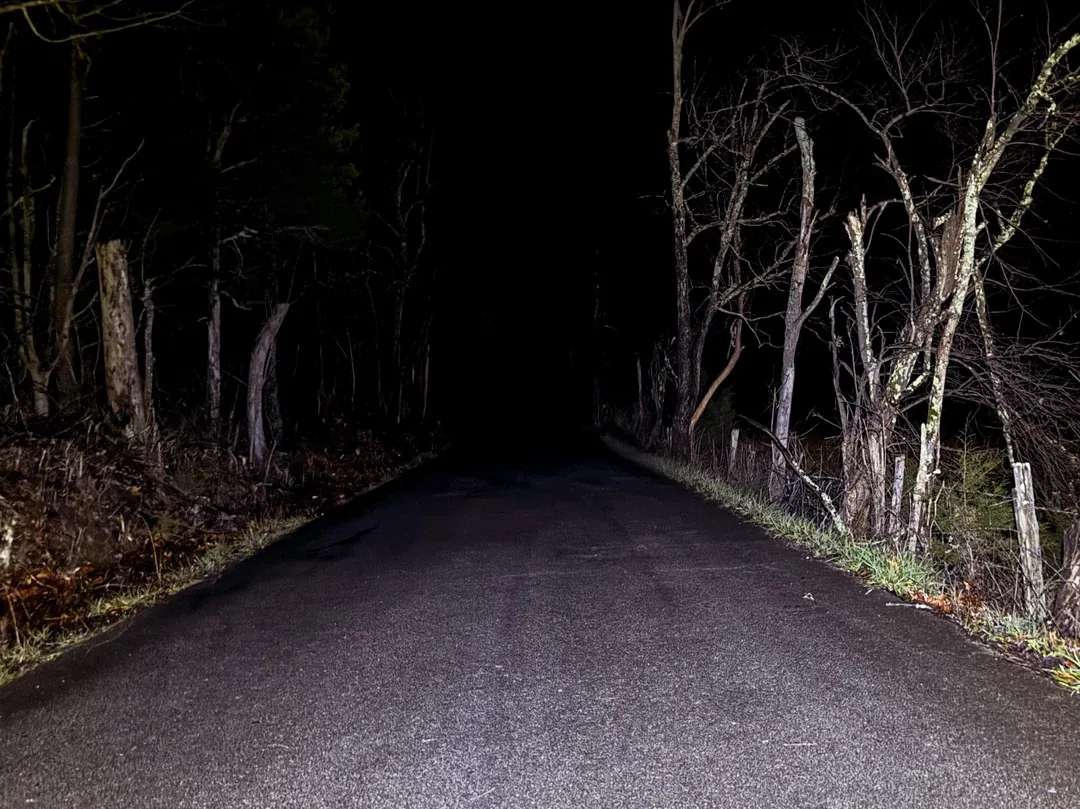
...and point clues to in-game locations (or even run isolated vignettes for a change of pace) where those feeling might be evoked. Easier said than done, of course, but perhaps that's a topic for another day.
In any case, because of our OSR-inspired approach, your players will have ample opportunity to meaningfully interact with it all. This, for me, is where the horror and immersion really come alive.
A Final Pinch of Spice - Reactive Events
Until this point, most of what we've prepared has been in the camp of 'things the players will eventually seek out.' I still think that ought to make up most of the content, but as I discovered from play, taking initiative session after session, moment after moment, can be exhausting for players. Not all agency-rich play need be proactive. The alternative, which is the last thing I designed and something I wish I'd leaned into more in hindsight, is the reactive event.
Reactive events are when your friend calls you terrified on the other end of the line to tell you their sister is missing. When you have the same dream that the cryptid's previous victims reported. Broadly, when the game comes to you.
Reactive events fill a few key roles.
- First, as I've already mentioned, is mixing up the pacing - after days of planning and executing your own hairbrained schemes, unplanned chaos can be exhilarating.
- Second is providing time pressure, to emphasize that the world will move on without the players if they play too conservatively.
- Third, they can show the player impact. Mess with the corrupt cop? In a few days he's at your door, asking uncomfortable questions. Convince him you aren't a threat? He's asleep outside of the donut shop again.
For more on this, see dreamshrike's excellent post for a related discussion on dynamism in the explorable world as seen in games like Mythic Bastionland.
Sticking the Landing
And finally, here we are at the end. When contemplating the scenario's finale, the temptation to prescribe events becomes strongest. Let them investigate their little hearts out, sure, but the ending is yours. When the time is right, chase them into the final room where they'll find the death ray you specifically put there for them to kill the baddie with. Easy peasy.
Resist this temptation! We didn't come all this way for you to steal the victory (or failure) that your players rightfully earned!
First, if this scenario is going to end on your players' terms, investigation (what is going on?) must eventually give way to action (what are we going to do about it?). For this to occur, especially in a horror/investigative game that up until now has mostly consisted of hiding, sneaking, and seeking, the players need to feel like proper action is viable and necessary. These three things must be believed.
- They have the tools to do what must be done.
- No one else will do it for them.
- Time is running out.
Again the importance of the ICI doctrine is made clear. Being generous with information and showing impact running up to this pivotal switch are critical in convincing players to trust in their own volition.
A word of caution: Planning without adequate information is no different than taking wild stabs in the dark. In my game, I teased the voice-stealing cryptid antagonist in the opening scene but left most of its features unstated, leaving it in a scary, but unapproachable limbo. Only after a much later, more detailed secondary encounter did the players feel like they could start to plan around it. In hindsight, I should've shown it more explicitly at the jump, or not at all!
But regardless, if all goes well, the players will eventually cobble together a plan, hopefully involving that occult spell they learned, and that weird bit of tech they found in the lab, and a few other tricks they've picked up along the way.
Of course, no plan survives first contact with the enemy. The actually ending will be a surprise to everyone! You can hope the encounter happens where there's a chance for escape, but there's no real balancing this fight. You must live with the possibility that this story could end in tragedy. But that's part of the fun!
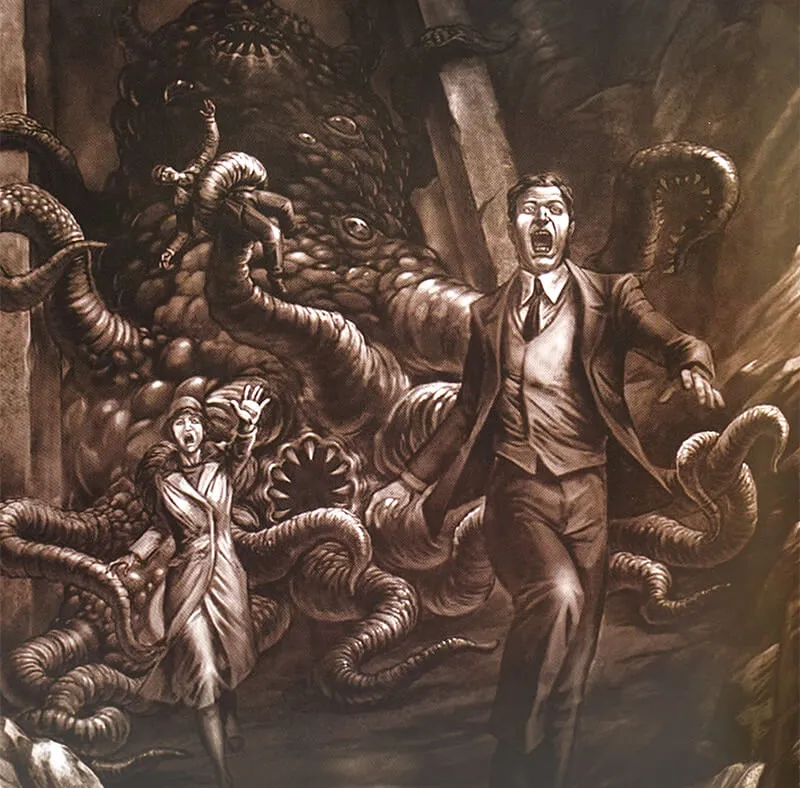
And should things really go downhill, you aren't without recourse. Perhaps a retreat is called, or a deal is made. Perhaps a new band of would-be-heroes will rise to the occasion next week. Perhaps success is anyone getting out at all.
Whatever happens, it's always better to think of the new possibilities the low moments bring than cheap your way out. Besides, endings are overrated. The real treasure was the nodes we explored along the way.